Nothing exciting has ever happened to our water.

That's the entire point. Here's what the government's laboratory found in it — and what it didn't.

See the results
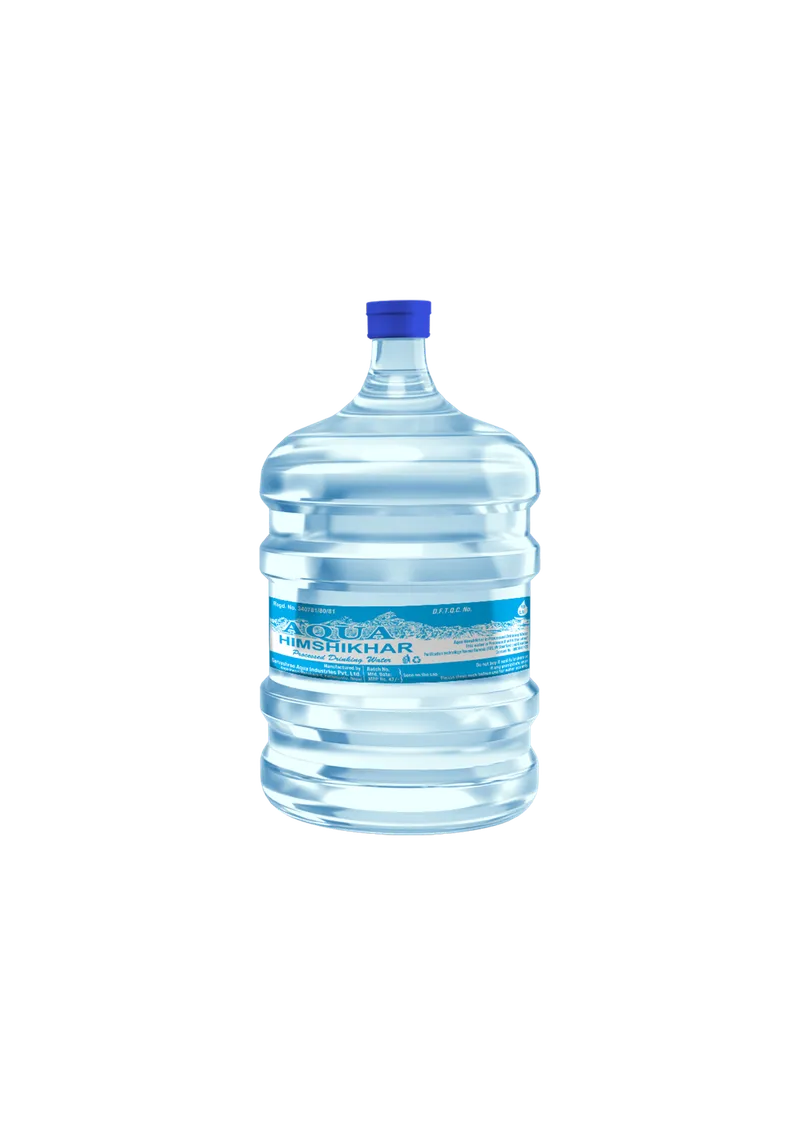
Aqua Himshikhar 19-litre water jar

What's not in it.

Total coliform bacteria
Absent
absent
E. coli
Absent
absent
Salmonella
Absent
absent
Yeast and mould
Absent
absent

And what is.

pH
6.7
6.0 – 8.5
Chlorine
<0.2 mg/L
max 0.2
Chloride
<30 mg/L
max 200
Hardness
<30 mg/L
max 200
Iron
<0.2 mg/L
max 0.3

Tested by the National Food and Feed Reference Laboratory
Department of Food Technology and Quality Control
Ministry of Agriculture and Livestock Development, Government of Nepal

Sample: Processed Drinking Water (Jar), sealed · Brand: Aqua Himshikhar
Batch F19 · Manufactured 2082-09-19 · Report ref RL-082/83/12879
Verified by Kamal Prasad Regmi, Senior Food Research Officer

"The values of tested parameters comply with the mandatory standard of Processed Drinking Water as stipulated by the Government of Nepal."

January 22, 2026

It starts in Gokarna.

A catchment inside Gokarna forest — protected land on the quiet side of the valley. No industry, no drains, no traffic. About as far from Kathmandu's noise as you can get and still be in it.

The chlorine result above is part of why we can say that. At under 0.2 mg/L there's essentially none in the water, which is what you'd expect from a forest catchment rather than a municipal line.

The seven stages

  1. Gokarna — where it starts
  2. Sand filtration — sediment and particulates
  3. Activated carbon — organic compounds, odors, and taste from soil and leaf matter
  4. Micron filtration — protects the membrane downstream
  5. Reverse osmosis — dissolved solids
  6. Ozonation — reverts to oxygen, leaves no residue
  7. UV, then sealed — bottled with no human contact

The law says four times a year.

We test every other day.

Nepal requires processed drinking water to be tested quarterly by an accredited laboratory. That's four tests a year, and the report above is our latest one — done by the government's own reference lab, which is where the bacteria testing happens.

In between, we run our own checks in the plant every alternate day. Twelve of them:

Appearance · Odour · Taste · Turbidity · Conductivity · pH · TDS · Total hardness · Total alkalinity · Ammonia · Iron · Phosphate

Roughly 180 rounds a year against the four the law asks for. Not because anyone requires it, but because a quarterly certificate tells you about one day in ninety.

Bacteria testing needs a laboratory and time to culture, so that's the quarterly accredited test. The twelve above are what we can check ourselves, and what would show up first if anything changed. Ammonia and phosphate, for instance, are contamination indicators — watching for them every other day on a forest source is specifically looking for the things that matter.
Still want to see it for yourself?

The plant is in Kageshwori, Manohara-6. Tell us when you'd like to come.

Get in touch